

From May 6 to 14, 2026, at the invitation of the Great Britain-China Centre (GBCC) and Roma Tre University, Professor He Ting, Vice Dean of the School of Law at Beijing Normal University, Lecturer Yang Lin, and doctoral students Cheng Zhaojin, Yao Yuxi, and Liu Yingqi traveled to Italy and the United Kingdom for academic exchange. This exchange was a key activity under the EU-funded project “Toward the Agenda for 2030 and Beyond: Supporting an Inclusive Justice System for Vulnerable Groups in China,” jointly undertaken by the School of Law at Beijing Normal University and the Great Britain-China Centre (GBCC). It aimed to conduct comparative research and exchange experiences on topics such as juvenile justice and the protection of children’s rights, with a view to further expanding international cooperation in these fields.
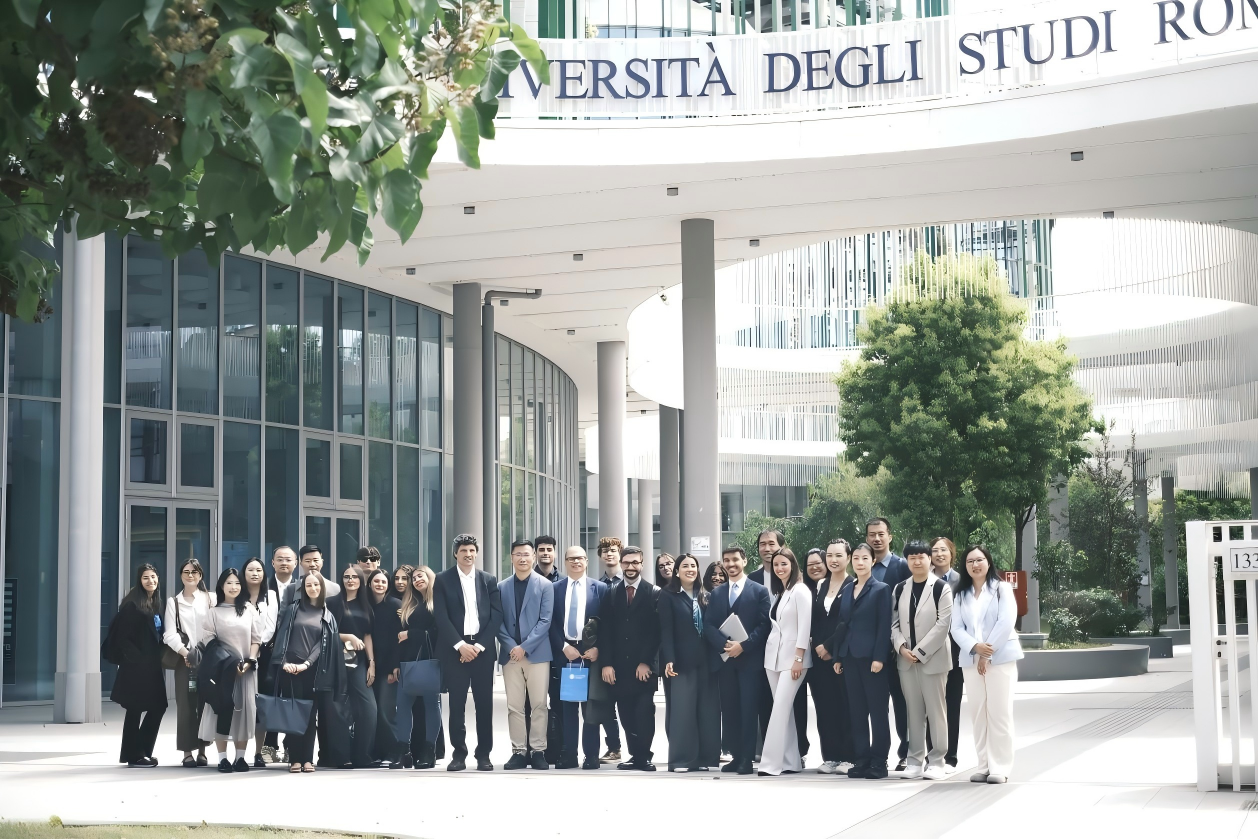
While in Italy, the delegation visited the Matemù Youth Center in Rome and Roma Tre University, and met with Professor Ettore Battelli and Carola Serpietri, a judge at the Italian Juvenile Court. The Matemù Youth Center has long provided educational and social support services to adolescents. During the visit, both sides engaged in in-depth discussions regarding the center’s target population, operational models, and its integration with the juvenile justice and social welfare systems.
At Roma Tre University, the delegation held exchanges with Professor Ettore Battelli and staff from the Children’s Rights Legal Clinic. The Italian side provided a systematic overview of the clinic’s curriculum, operational mechanisms, and student participation in child rights protection practices, and organized a comparative seminar on Chinese and Italian juvenile justice protection systems based on the clinic’s coursework. Centered on the institutional implementation of child rights protection, the seminar conducted a comparative analysis of the historical development, institutional structures, procedural operations, protective philosophies, and social support mechanisms of the juvenile justice systems in both countries. Drawing on China’s experience in developing its juvenile justice system, members of the delegation exchanged views with faculty and students on topics such as the implementation of child rights protection within judicial proceedings, the integration of legal education with judicial practice, and the professional development of the juvenile justice system.
During discussions with Judge Carola Serpietri of the Italian Juvenile Court, both sides engaged in in-depth exchanges on issues such as diversion procedures in the Italian juvenile justice system, the composition and collegial decision-making mechanisms of juvenile courts, case adjudication methods, and the role of judicial authorities in educational rehabilitation and social support.
During their stay in the United Kingdom, the team visited Vinney Green Secure Children’s Home, the UK Ministry of Justice, the Southwark Youth Justice Service, and the Honest Grind community project. During the visit to Vinney Green Secure Children’s Home, staff members introduced the facility’s infrastructure, curriculum, professional team composition, risk assessment methods, and educational and rehabilitative programs. The team discussed with the other party issues related to the placement, education and rehabilitation, behavioral management, and follow-up support for minors involved in criminal offenses.
At the UK Ministry of Justice, the team met with Mirelle Lloyd Taylor, Head of Coordination and Management for Secure Schools, and Sandra Bennett, a project manager, focusing on the institutional positioning of UK secure schools, construction progress, their functional roles within the juvenile justice system, referral mechanisms for juveniles and other issues. During exchanges with the Southwark Youth Justice Team and staff from the Honest Grind community project, both sides discussed the integration of social work with juvenile justice procedures, coordination between welfare support and judicial treatment., and the role of community projects in the diversion and reintegration of juveniles into society.